
The Ultimate Scrap Metal Recycling Guide: What is it, Where to Take it, and What Does it Become?
That old dryer in the garage, the pile of copper pipe left over from a renovation, the busted metal shelving you've been meaning to deal with – This is all scrap metal, and it’s also surprisingly valuable.
In this article, we'll cover what counts as scrap, where to take it, and what happens to it after you drop it off, so you can be sure you’re #recyclingright.
What is Scrap Metal?
Scrap metal, for purposes of recycling, is defined as any irregularly shaped or bulky items made primarily of a single type of metal which are not accepted in residential recycling systems.
While metal cans, foils, and tins usually go right in your household recycling bin, there are plenty of other metal items that require a different kind of recycling stream, and that's where the scrap yard comes in.
Scrap yards typically accept a wide range of ferrous metals (iron and steel) and non-ferrous metals (copper, aluminum, brass), including:
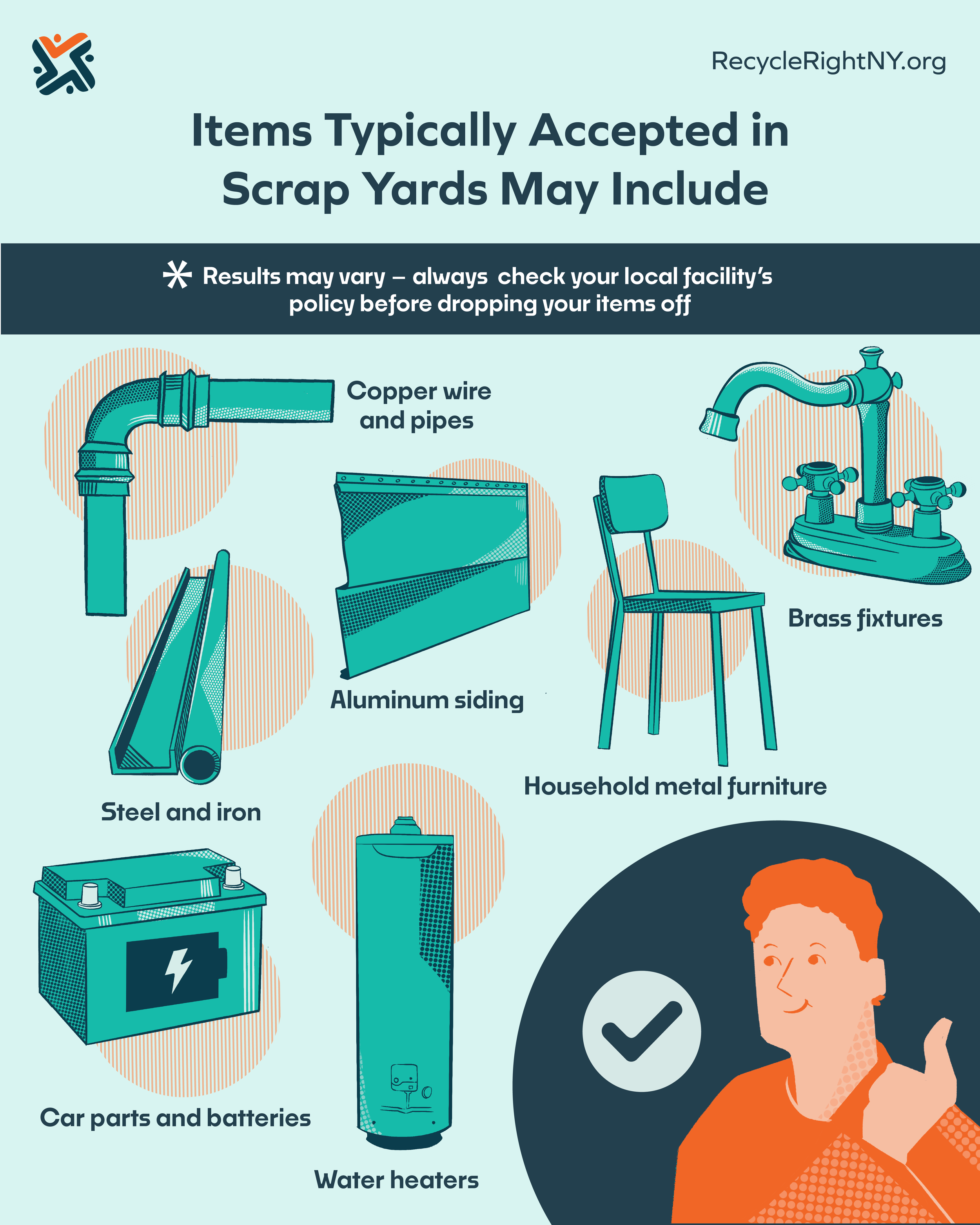
Copper wire and pipes
Aluminum cans and siding
Steel and iron
Brass fixtures
Appliances*
Car parts and batteries
Household metal furniture
Water heaters
*Refrigerators/ACs: Any appliance that contains refrigerants like freon must have the refrigerant removed by a certified technician before the appliance can be recycled or disposed of — it’s the law!
Several disposal options for these appliances are often available, including curbside pickup, local drop-off sites, and retailer take-back or rebate programs. Check with your scrap yard, recycler, electric utility, appliance retailer or manufacturer, or county waste department to find out what's offered in your area.
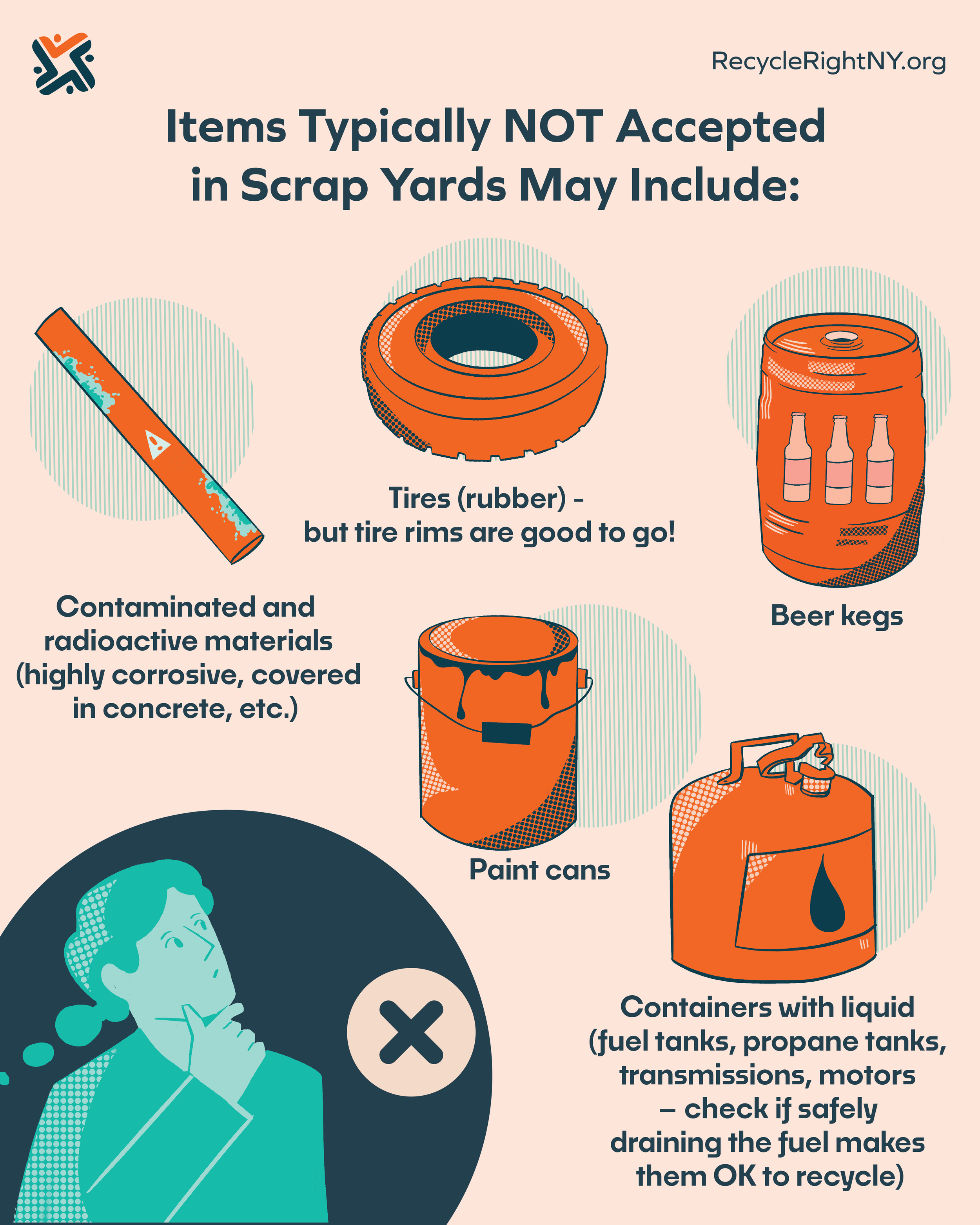
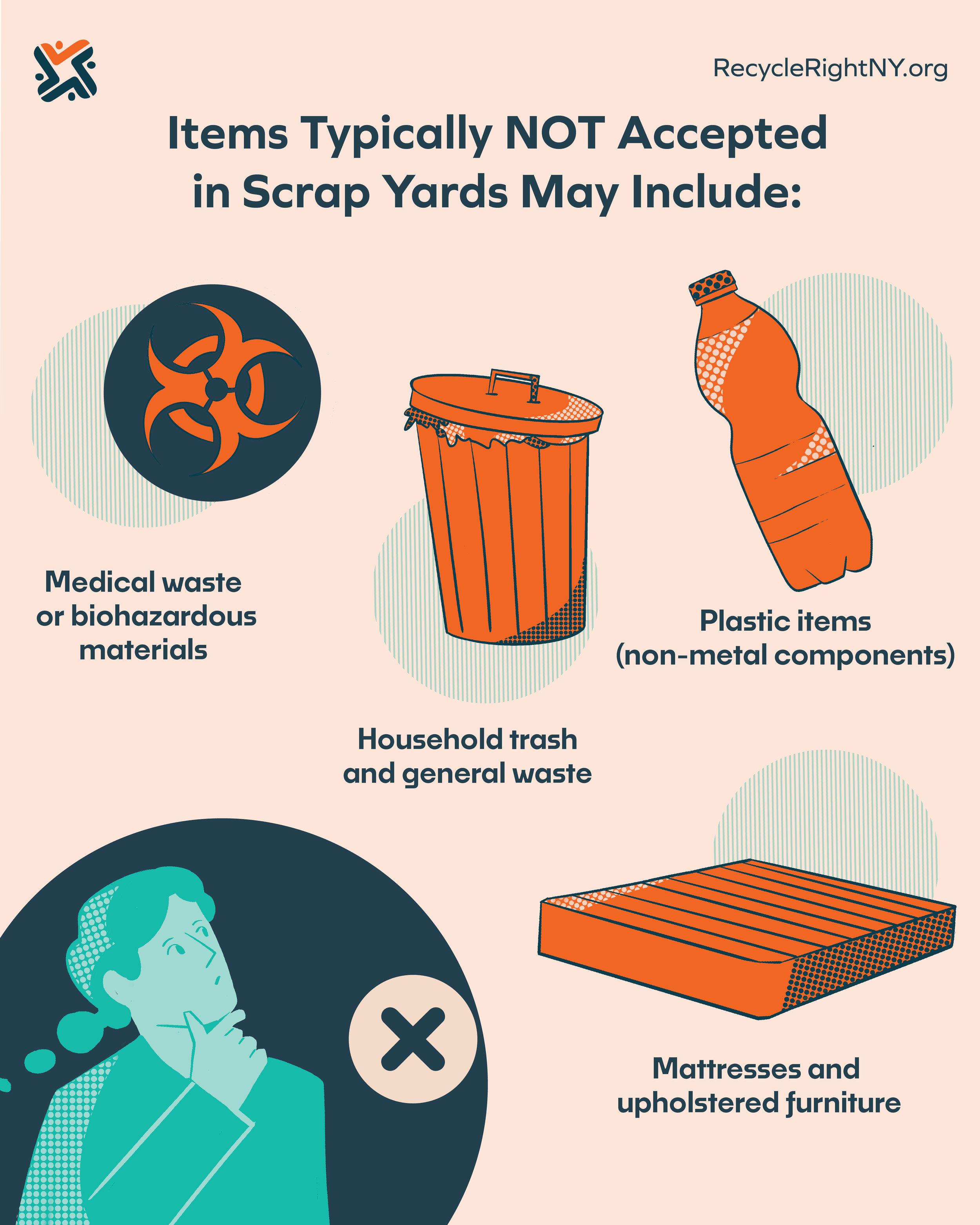
Items often not accepted at scrap yards include:
Beer kegs
Paint cans
Containers with liquid (fuel tanks, propane tanks, transmissions, motors – check if draining the fuel makes them OK to recycle)
Tires (rubber) - but tire rims are good to go!
Contaminated and radioactive materials (highly corrosive, covered in concrete, etc.)
Mattresses and upholstered furniture
Plastic items (non-metal components)
Household trash and general waste
Medical waste or biohazardous materials
Special Considerations
Results may vary at your local scrap yard: what’s not accepted at one may be accepted at another. Some less straightforward items that are usually pretty tricky include:
Electronics: Not all scrap yards accept electronic waste, and those that do must be properly registered with the state. To find an electronic waste acceptance location, visit recyclerightny.org/electronics-recycling-tool.
Catalytic converters: To deter theft, scrap yards often require proper
Did you know?
“Ferrous” refers to the presence of iron, which is Fe on the periodic table! These metals are often denser and magnetic, while non-ferrous metals are often lighter and non-magnetic.
Since metal recycling varies by scrap yard, it’s important to check your local facility’s policy before dropping your items off.

Where to Take Your Scrap Metal (It’s Not Just the Scrap Yard!)
Metal is one of those materials that takes a serious amount of energy, time, natural resources, and money to produce, from extracting raw material all the way to the finished product. That makes it especially worth taking care of at the end of its life.
Luckily, there are a few different options when it comes to recycling your old metal junk – and some of them may even come with a pay-out. Read on!
Scrap Yards and Other Options
A scrap yard is a designated facility that specializes in scrap metal recycling. They are often private but regulated, and a key feature is that they often offer payment for items received. This depends on the quantity, condition, and market value of your load. Smaller quantities may still be accepted but may not result in a payout. Confused what to do next? Scroll down for a step-by-step guide on how to take your metal to a scrap yard!
Additionally, municipalities often provide options for scrap metal collection, such as collection at a transfer station or offering local pickup services. While these options may be more convenient than a scrap yard, they often don’t provide a payout.
Be sure to check your local municipal solid waste department website for information on transfer stations and local pickup services, which may be offered by appointment or at scheduled intervals for community bulk pickup.
The bottom line: When deciding what to do with your scrap metal, consider the distance of a scrap yard to you, the size of your load, your interest in a payout, and what local services are offered to you.
Step-by-step guide on how to take your metal to a scrap yard:
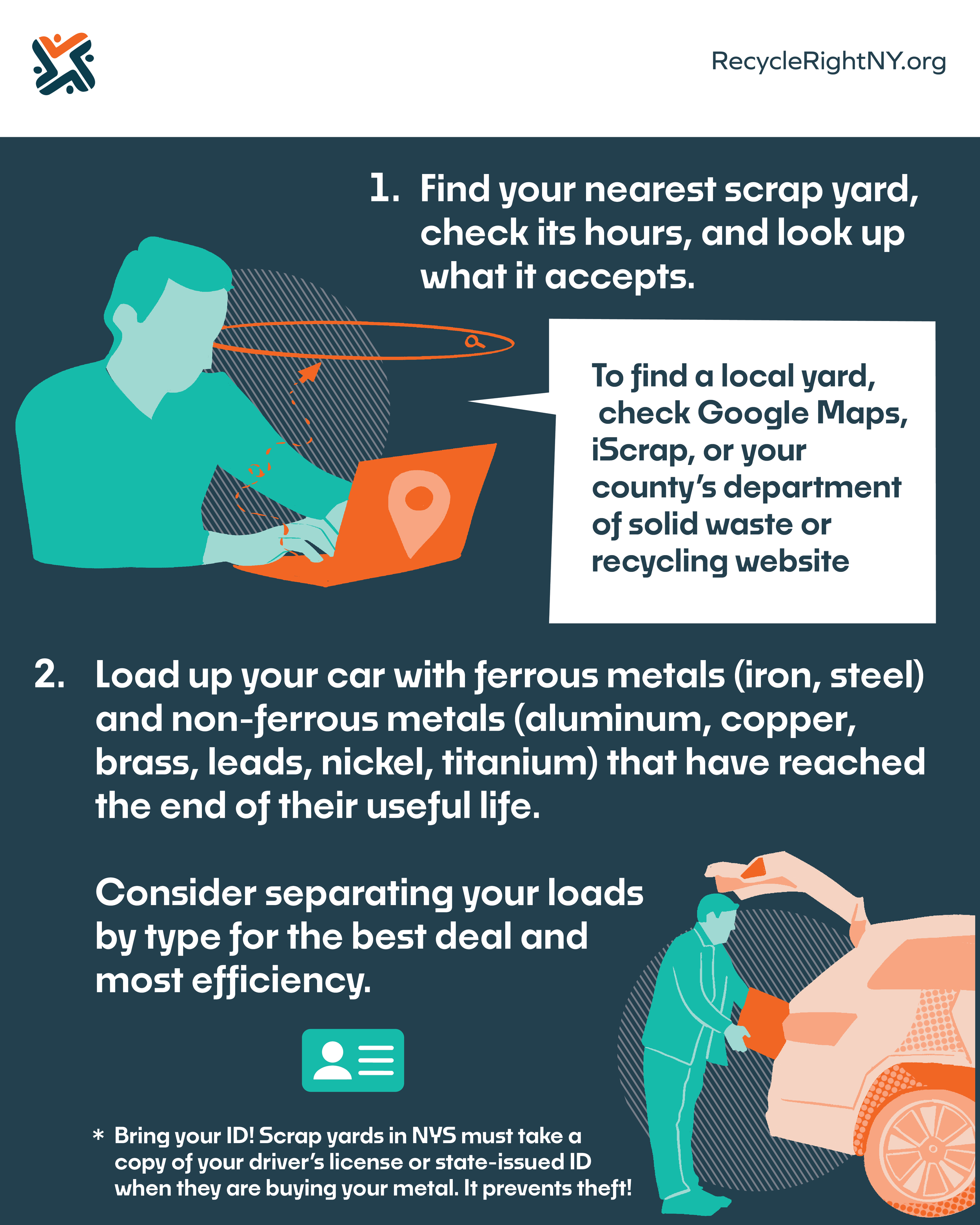
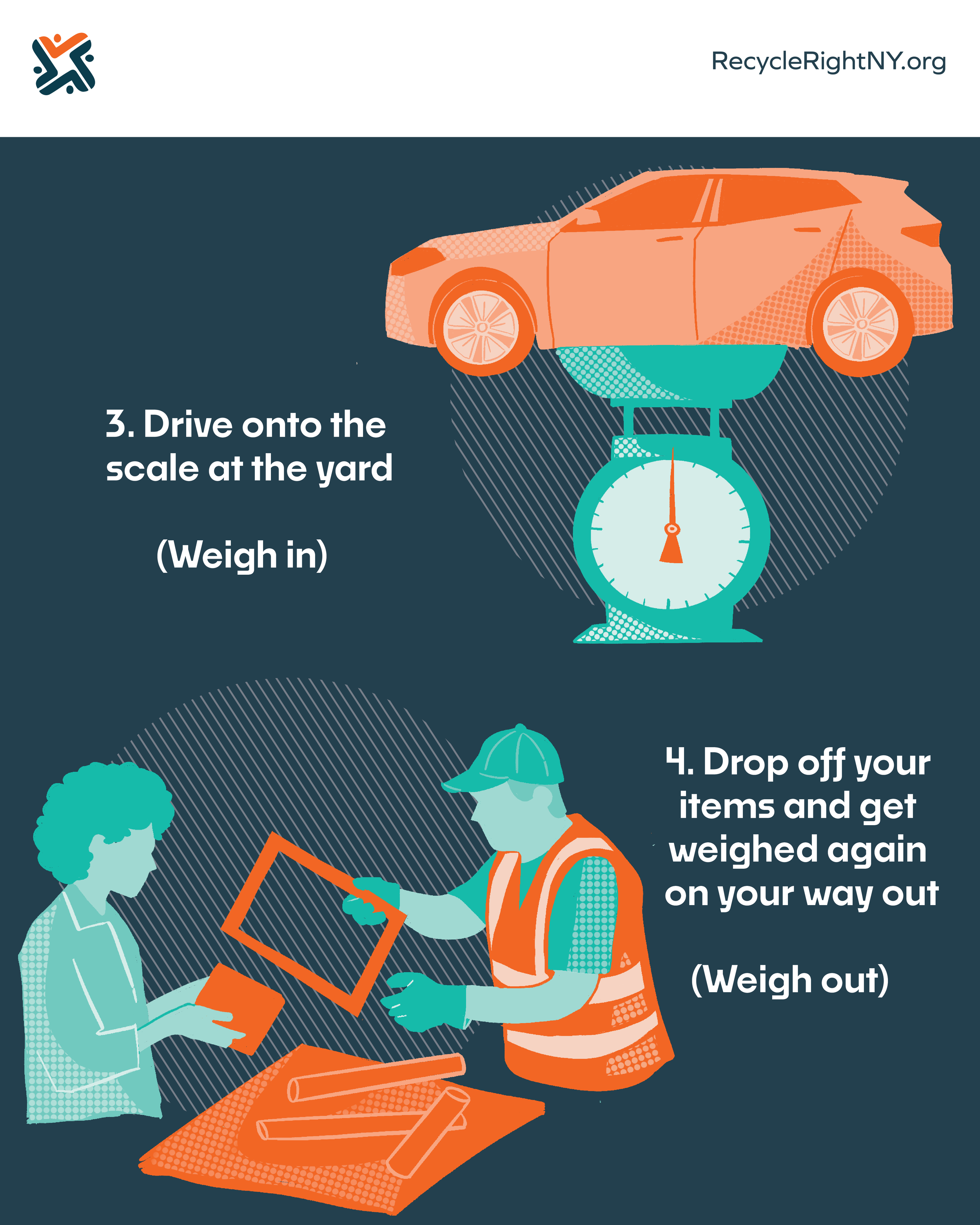
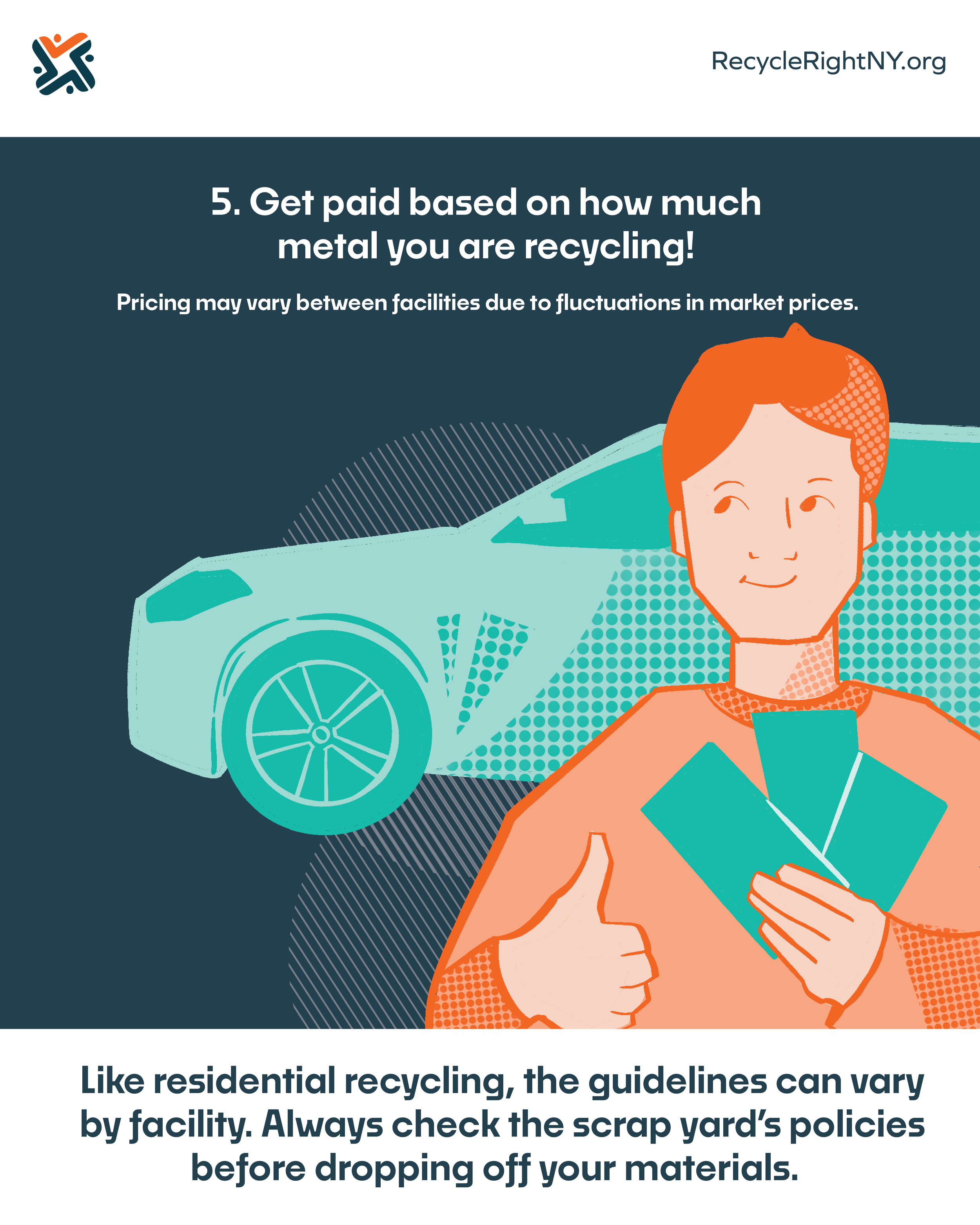
If visiting the scrap yard is your chosen method of recycling your metal, here's how you can make a little extra cash, step-by-step:
Find your nearest scrap yard, check its hours, and look up what it accepts. To find a local yard, check Google Maps, iScrap, or your county’s department of solid waste or recycling website
Load up your car with ferrous metals (iron, steel) and non-ferrous metals (aluminum, copper, brass, leads, nickel, titanium) that have reached the end of their useful life. Consider separating your loads by type for the best deal and most efficiency
Bring your ID! Scrap yards in NYS must take a copy of your driver’s license or state-issued ID when they are buying your metal. It prevents theft!
Drive onto the scale at the yard (Weigh in)
Drop off your items and get weighed again on your way out (Weigh out)
Get paid based on how much metal you are recycling! Pricing may vary between facilities due to fluctuations in market prices.
Like residential recycling, the guidelines can vary by facility. Always check the scrap yard’s policies before dropping off your materials.

Why do some metals go in the recycling bin while others need to go to the scrap yard?
Residential recycling is built for consistency and is best suited for processing smaller, clean, common metals that sorting machines can move through quickly. Think of a Recyclables Handling and Recovery Facility (RHRF) as being for standardized items (cans, tins, foils etc.) that come in a predictable shape, material, and size. The sorting machines are designed with these items in mind, and anything else added poses the risk of damaging the system (a spool of wire could jam up a conveyor belt).
Scrap yards are built for the more irregular, larger, and complex metal items which translates to slower, more hands-on work. Scrap yards can process bulky items (like whole cars!) and other unique, randomly shaped pieces of metal (like the wiring inside an electric cord, or the steel drum of a dryer). And when received at higher volumes, customers can get paid for the material they bring in.
What Happens to Recycled Scrap Metal?
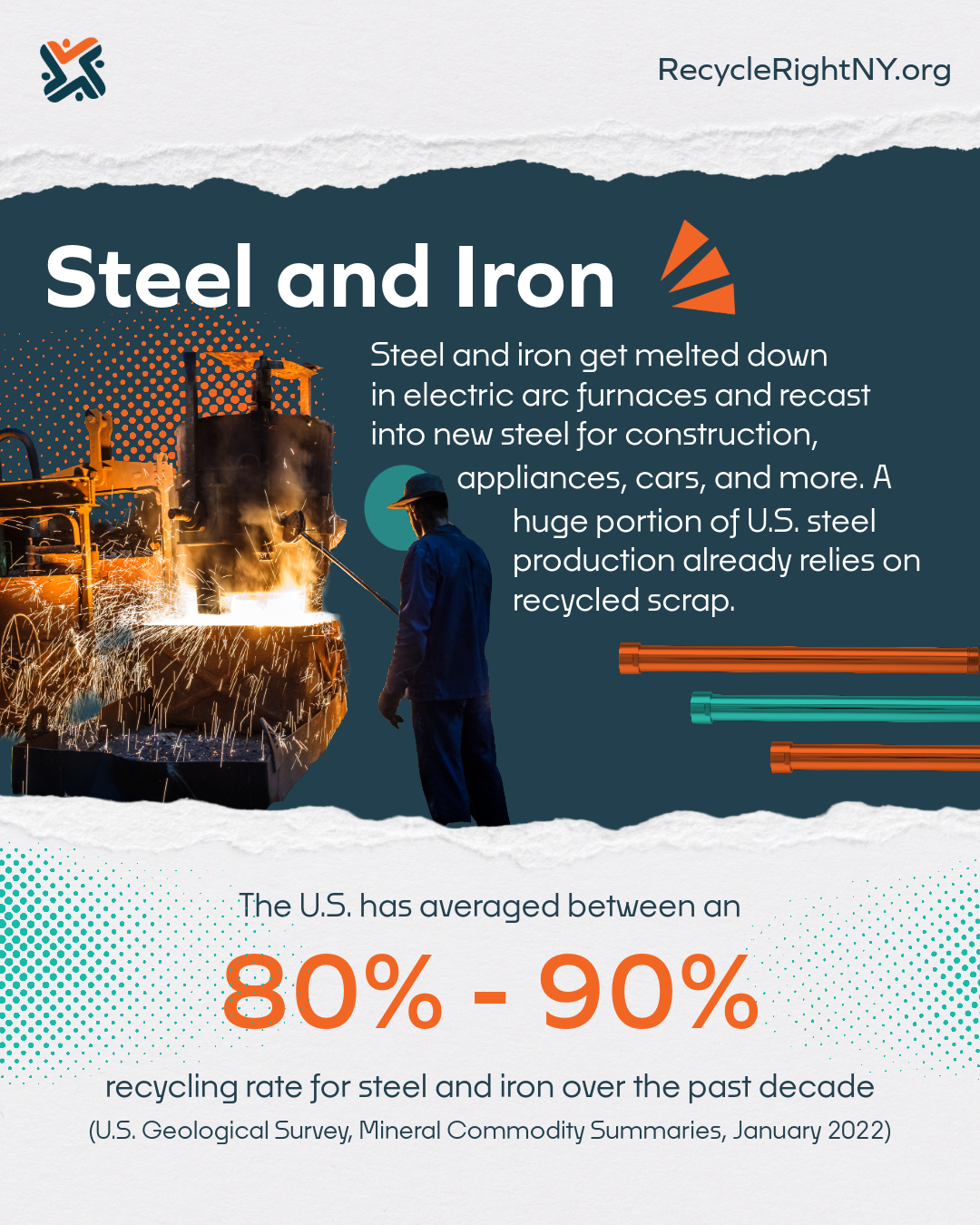
Once the scrap yard sorts and grades everything by metal type, it gets sold to brokers or directly to mills and smelters. Here's a look at what happens to some of the most common metals that move through the system:
Steel and iron get melted down in electric arc furnaces and recast into new steel for construction, appliances, cars, and more. A huge portion of U.S. steel production already relies on recycled scrap. The U.S. has averaged between an 80% and 90% recycling rate for steel and iron over the past decade. (U.S. Geological Survey, Mineral Commodity Summaries, January 2022)
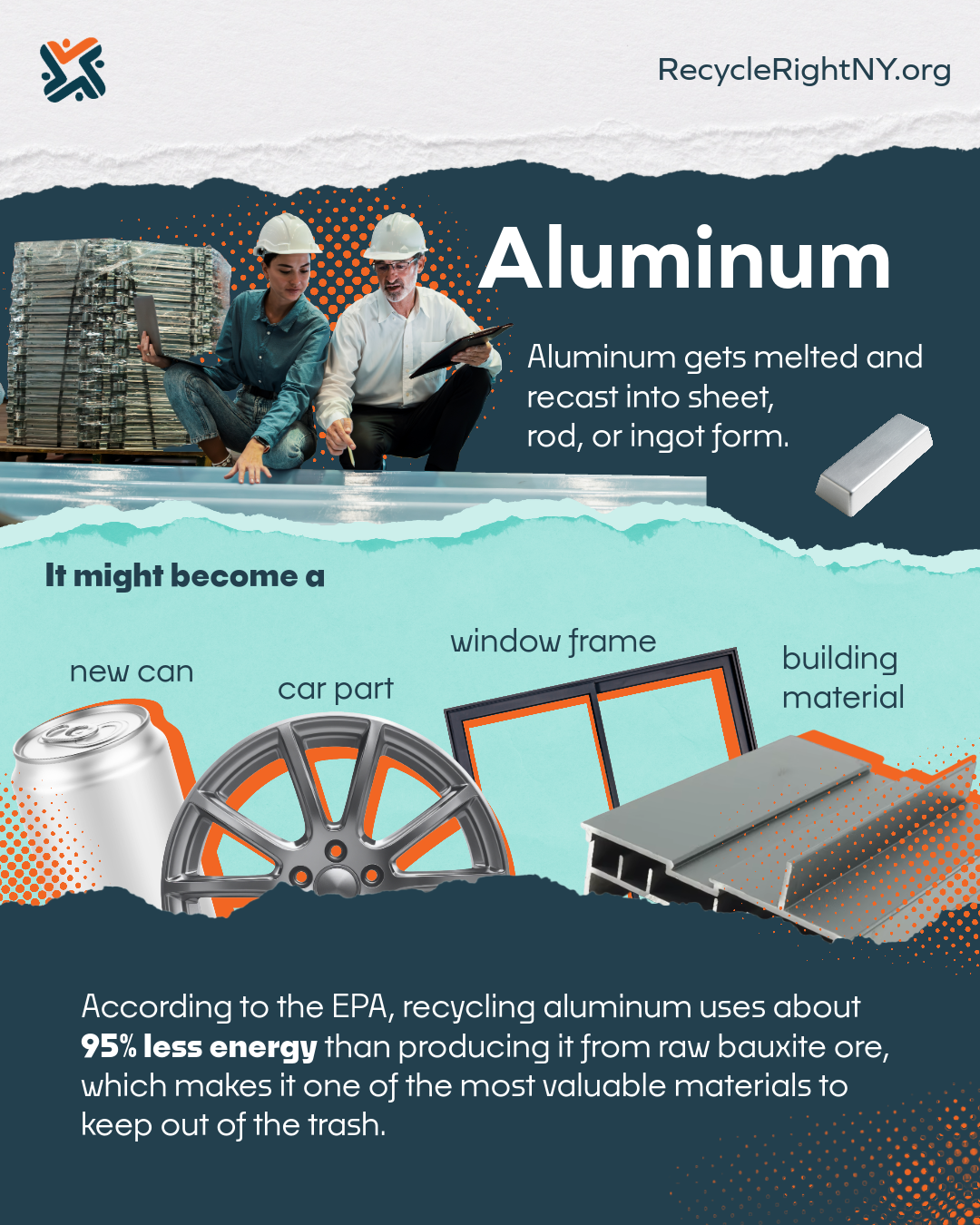
Aluminum gets melted and recast into sheet, rod, or ingot form. It might become a new can, a car part, a window frame, or building material. According to the EPA, recycling aluminum uses about 95% less energy than producing it from raw bauxite ore, which makes it one of the most valuable materials to keep out of the trash.
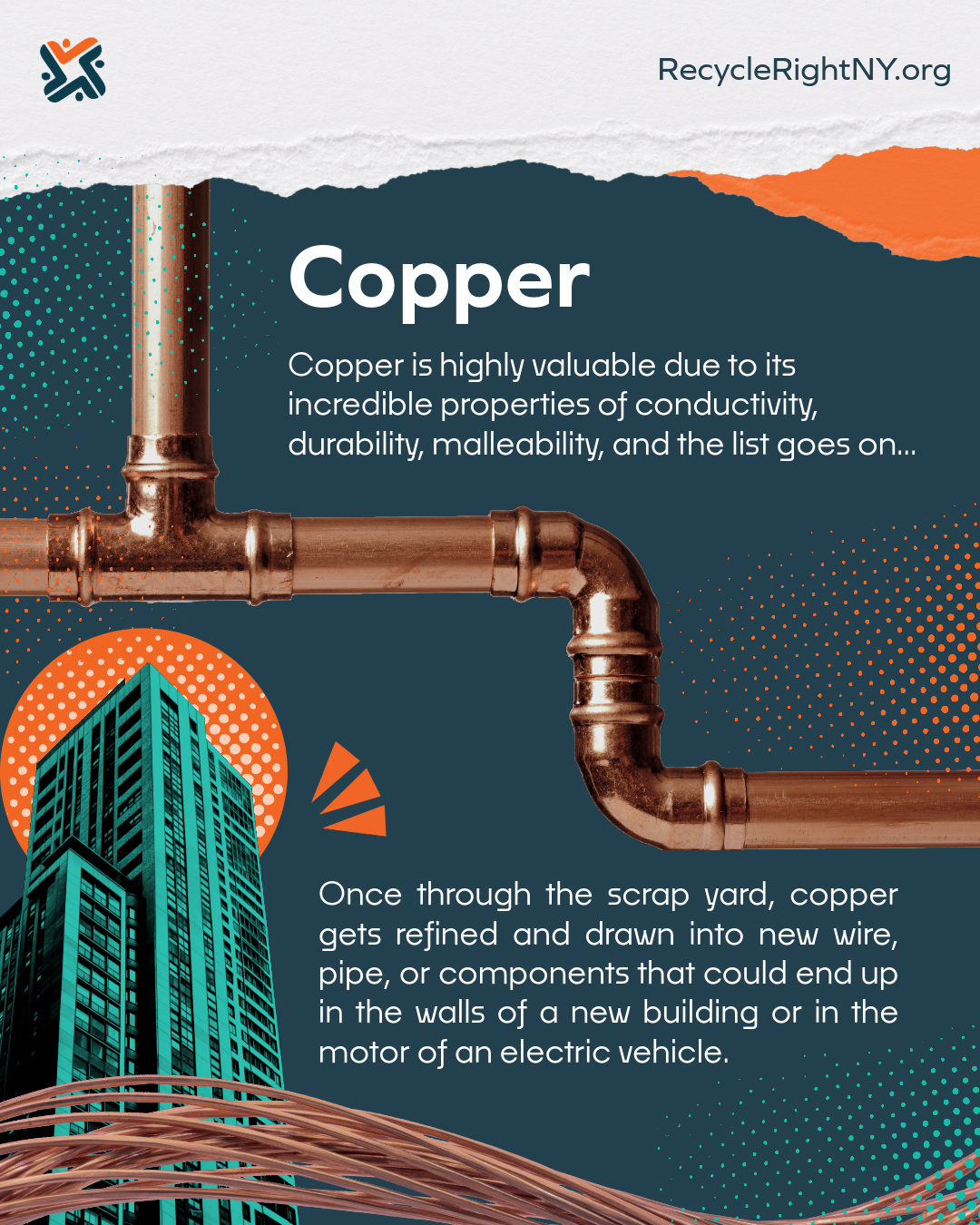
Copper is highly valuable due to its incredible properties of conductivity, durability, malleability, and the list goes on...Once through the scrap yard, copper gets refined and drawn into new wire, pipe, or components that could end up in the walls of a new building or in the motor of an electric vehicle.
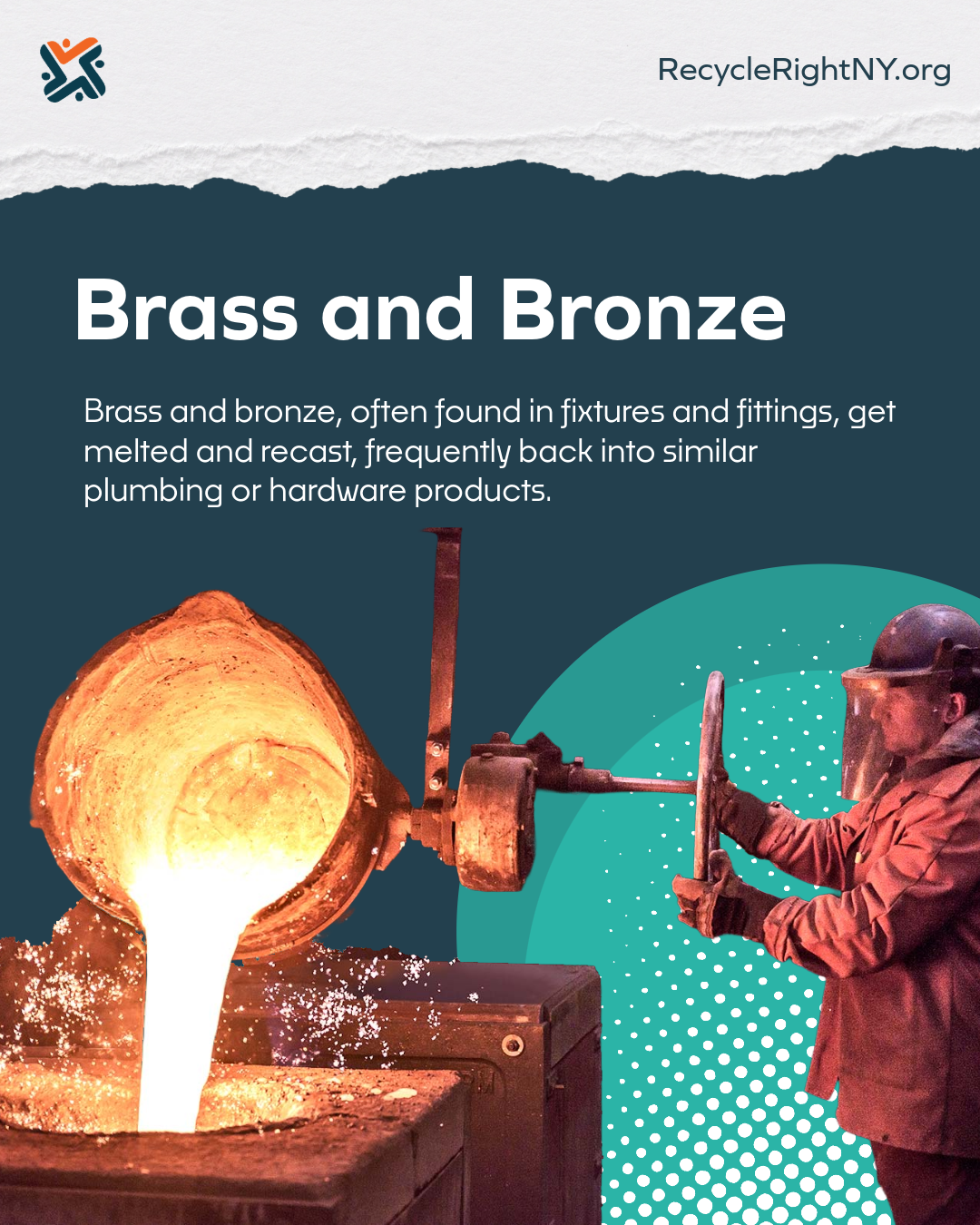
Brass and bronze, often found in fixtures and fittings, get melted and recast, frequently back into similar plumbing or hardware products.
________________________________
The commonality between metals is that they are infinitely recyclable without losing their special qualities. This is why scrap yards are both economically viable and environmentally critical—the value of the material is what keeps the entire system running.
Looking for More Recycling Content?
Follow RecycleRightNY on socials to get the latest recycling info at your fingertips!